Pulling this page together.
Preparing content, navigation, and supporting references for this route.
Preparing content, navigation, and supporting references for this route.
A historical study of how alternate attendance, highway discipline, domain expenditure, and status ritual converted a polycentric order into a governable legitimacy regime.
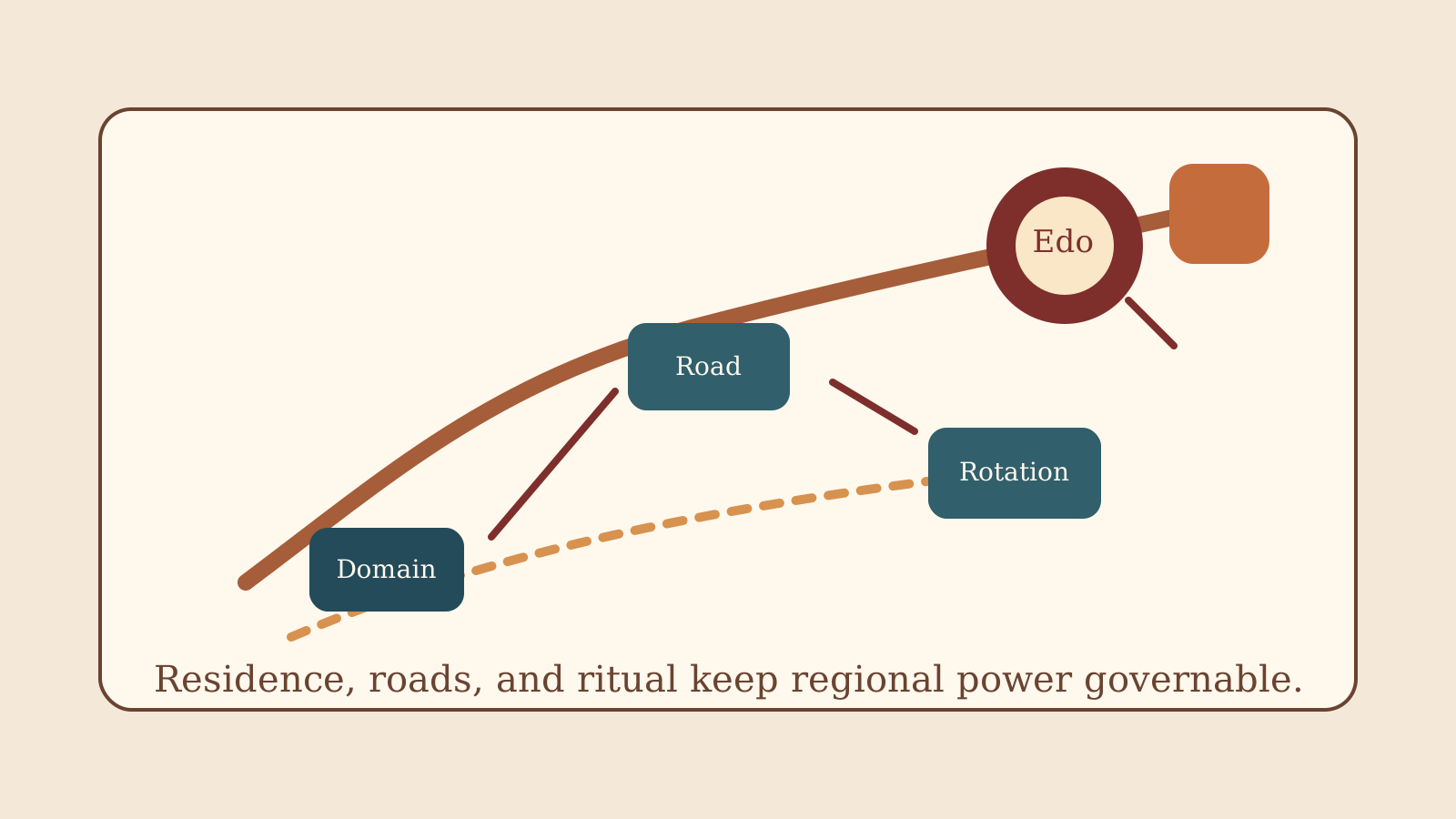
The Tokugawa case is most useful when read as a control system rather than only as a feudal etiquette rule. Alternate attendance bound domain lords to Edo through repeated travel, residence obligations, escort display, and household separation. Roads, checkpoints, and status ritual turned that obligation into a recurring demonstration of who remained inside the shogunal bargain.
That makes this a strong governance-proof study. The real question is not whether the shogun could issue commands. It is whether a polycentric order could keep regional elites expensive to monitor, visible enough to discipline, and invested enough in the same legitimacy frame to remain governable.
Use this first when you need to locate which pressure surface the shogunate is stabilizing before you compare elite-discipline mechanisms.
Legitimacy-Capture CouplingProvides the core lens for why domain burden remains tolerable only while hierarchy, status recognition, and public order still appear coupled.
Administrative CorridorClarifies why roads, checkpoints, inns, and relay routines matter as governance infrastructure rather than neutral transport.
Polycentric Empire Stability ModelShows how a multi-center order can stay coherent when regional elites keep enough autonomy to function but not enough detachment to drift free.
Foundation Peripheral Control ModelProvides the contrasting proof companion where selective dependency and replacement substrate keep the periphery integrated without the same ritual-and-corridor burden.
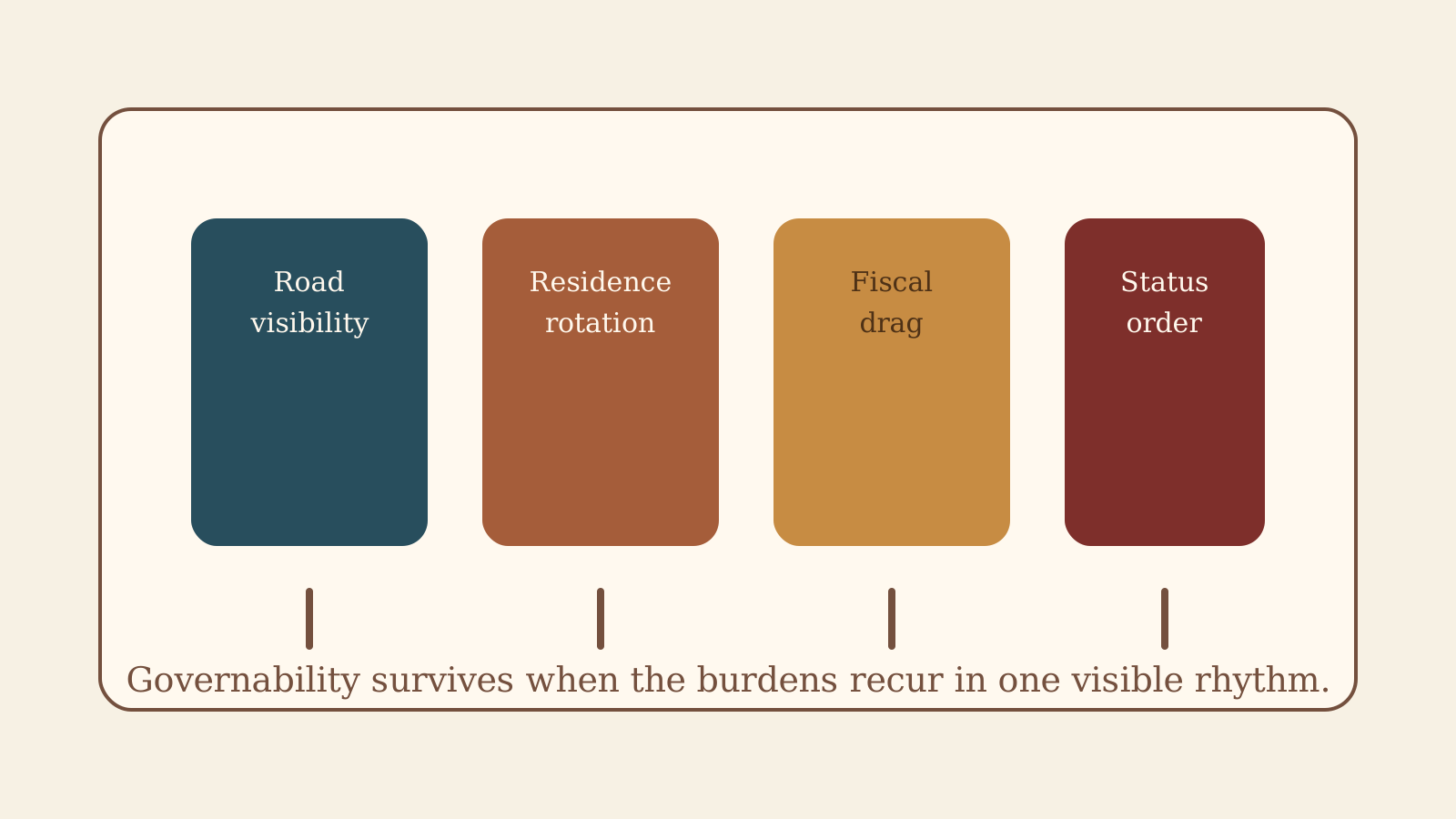
The system converts status and movement into governability through four linked burdens. Residence rotation keeps elite families exposed to the center. Highway discipline makes that movement legible and inspectable. Domain expenditure turns compliance into a recurring fiscal cost. Ritual hierarchy ensures the burden still reads as proper order instead of naked extraction.
| Axis | Question | Signal |
|---|---|---|
| Residence rotation | What keeps regional elites materially tied to the capital? | Alternate attendance, family residence, split households, long-term presence in Edo, predictable absence from home domains |
| Corridor visibility | How does the center keep the obligation observable and difficult to fake? | Highway checkpoints, travel schedules, escort display, relay stops, road supervision |
| Fiscal drag | Why does compliance also limit independent military accumulation? | Travel expense, urban residence cost, retainer maintenance, gift burden, ceremonial consumption |
| Legitimacy frame | Why does the burden remain governable rather than immediately intolerable? | Status recognition, ranked order, peace dividend, formal privilege, predictable law, ritual deference |
The regime works because oversight, expense, and status reinforcement recur often enough to prevent independent drift from becoming normal.
Domains still control local life, yet their most visible elites are repeatedly drawn back into one central order and one monitored road network.
The case is strongest when ritual is treated as operating infrastructure rather than as symbolic decoration. Alternate attendance matters because status display, corridor travel, fiscal burden, and hostaging all recur together. If the roads were unmonitored, the travel could not discipline. If the hierarchy were illegible, the burden would read as naked extraction. If domain expenditure were optional, the center would lose one of its most reliable limits on autonomous accumulation.
This makes the system more rigorous than a generic "centralized feudal" description. The order works by fusing legitimacy and logistics into the same repeated rhythm. Elite power is not abolished. It is kept inside a corridor-governed schedule that makes drift visible and expensive.
The portable lesson is that polycentric orders can remain stable without destroying regional difference if they force elite dependence to become repetitive, observable, and costly. The exact Tokugawa form is historically specific, but the wider pattern applies to any world where travel obligation, ceremonial hierarchy, and fiscal burden can be combined into one control regime.
It also has a clear limit. If the prestige frame breaks or the road-and-checkpoint rhythm stops yielding order, the same obligations quickly become sharper politically. The burden only remains governable while it still returns a peace dividend and a believable hierarchy.
This study is the useful second companion to Polycentric Empire Stability Model because it shows the same bargaining geometry under a different control logic than Foundation. Foundation stabilizes the periphery by owning a replacement substrate that others still need. Tokugawa stabilizes the periphery by making elite autonomy repetitive, inspectable, and expensive to detach through one legitimacy-and-corridor rhythm.
Read the pair together when the governance question is not simply whether a multi-center order holds, but how it holds. Foundation is the better proof when the center dominates the replacement layer. Tokugawa is the better proof when the center keeps regional elites inside the same order by synchronizing movement, fiscal drag, visibility, and status recognition.
One common misread is to treat sankin kotai as mostly ceremonial, with logistics added afterward. The stronger reading is that ceremony works because it is tied to roads, checkpoints, residence obligations, and recurring expenditure. Another misread is to think the case proves regional autonomy is already gone. The order works because domains keep real local weight while the center keeps separation expensive enough to remain unattractive.
It is also easy to flatten the case into generic coercion. The burden remains governable only while peace, rank, and predictable order still come back through the same corridor system. Once that return weakens, the same rhythm stops reading as legitimate discipline and starts reading as raw imposition.
The reusable lesson is that a stable order can govern elites by making loyalty visible, repetitive, and costly inside one corridor system. Tokugawa Japan is useful because it shows how status ritual, travel discipline, and fiscal drag can hold a polycentric field together without eliminating regional distinction. That makes it the right proof companion when the world does not hinge on a replacement substrate monopoly, but still needs a believable way to keep strong regional actors inside one order.