Preparing the current spcent route.
The page shell is online. Shared content and route data are still being assembled.
A synthetic study of how toll asymmetry, frontier levy burdens, and oath legitimacy drift turn a river confederacy from coordinated defense into a bargaining shell.
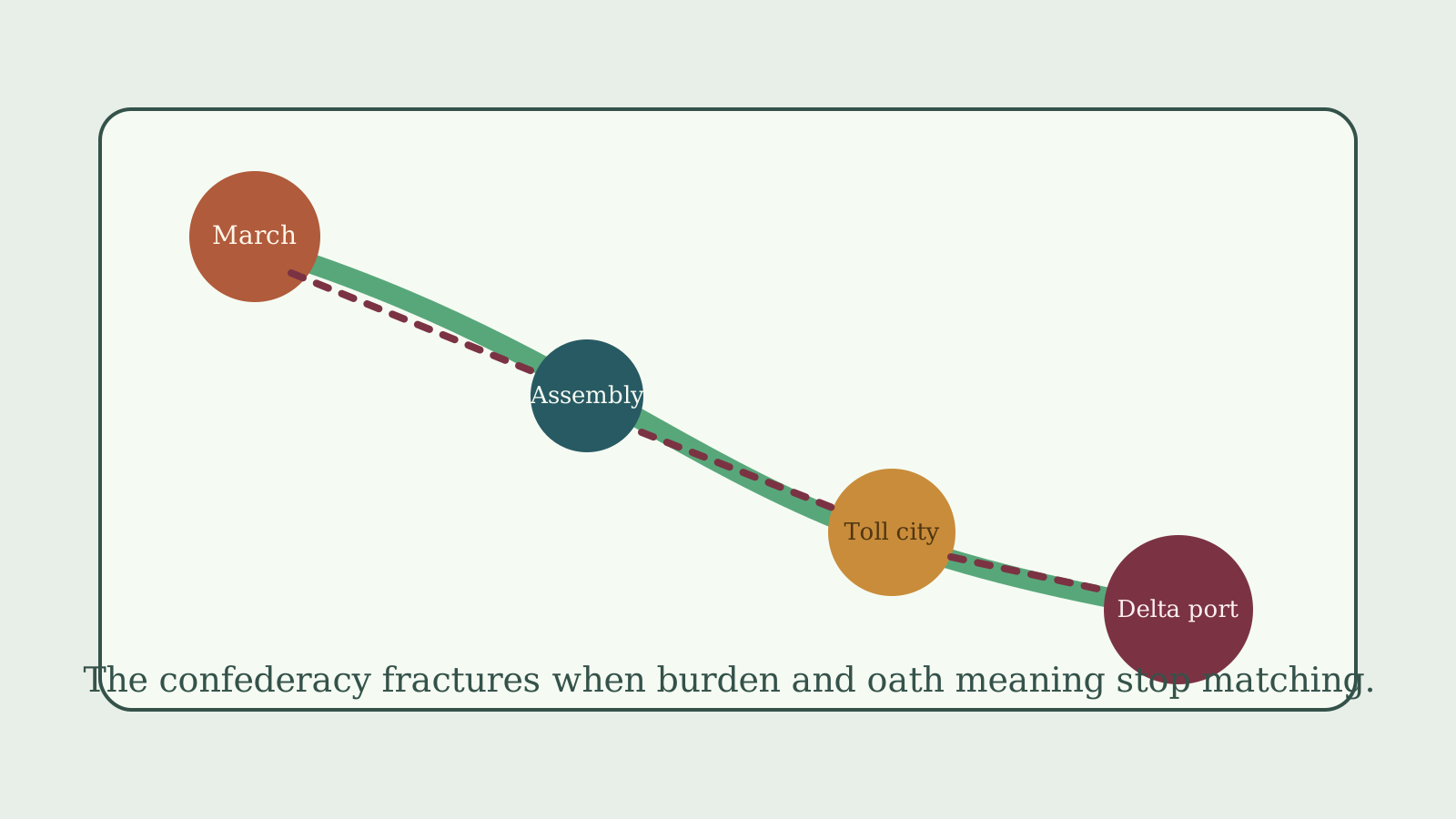
The Oath River Confederacy links toll cities, grain basins, and frontier marches through one defense pact and one ritual assembly. In stable years the arrangement feels efficient. Upper-river lords raise cavalry and patrol raiders. Mid-river ports collect customs. Downstream cities finance flotillas and arbitration. The confederacy appears coherent because each region benefits from the larger route.
Fracture begins when those burdens stop matching. Frontier levies rise faster than river toll rebates. Port cities keep bargaining for tariff privilege while march lords absorb raids and delayed relief. The oath still exists, but it no longer interprets the same pain for everyone inside the system.
Provides the core lens for reading how uneven burden, reward divergence, and delay strategy hollow the confederacy before treaty collapse becomes explicit.
Legitimacy-Capture CouplingShows why tolls and levies stay acceptable only while members still believe the oath returns real protection and adjudication.
Control Surface MatrixClarifies why grain depots, ford towns, toll gates, and assembly sites matter more than nominal territory when coalition leverage is distributed unevenly.
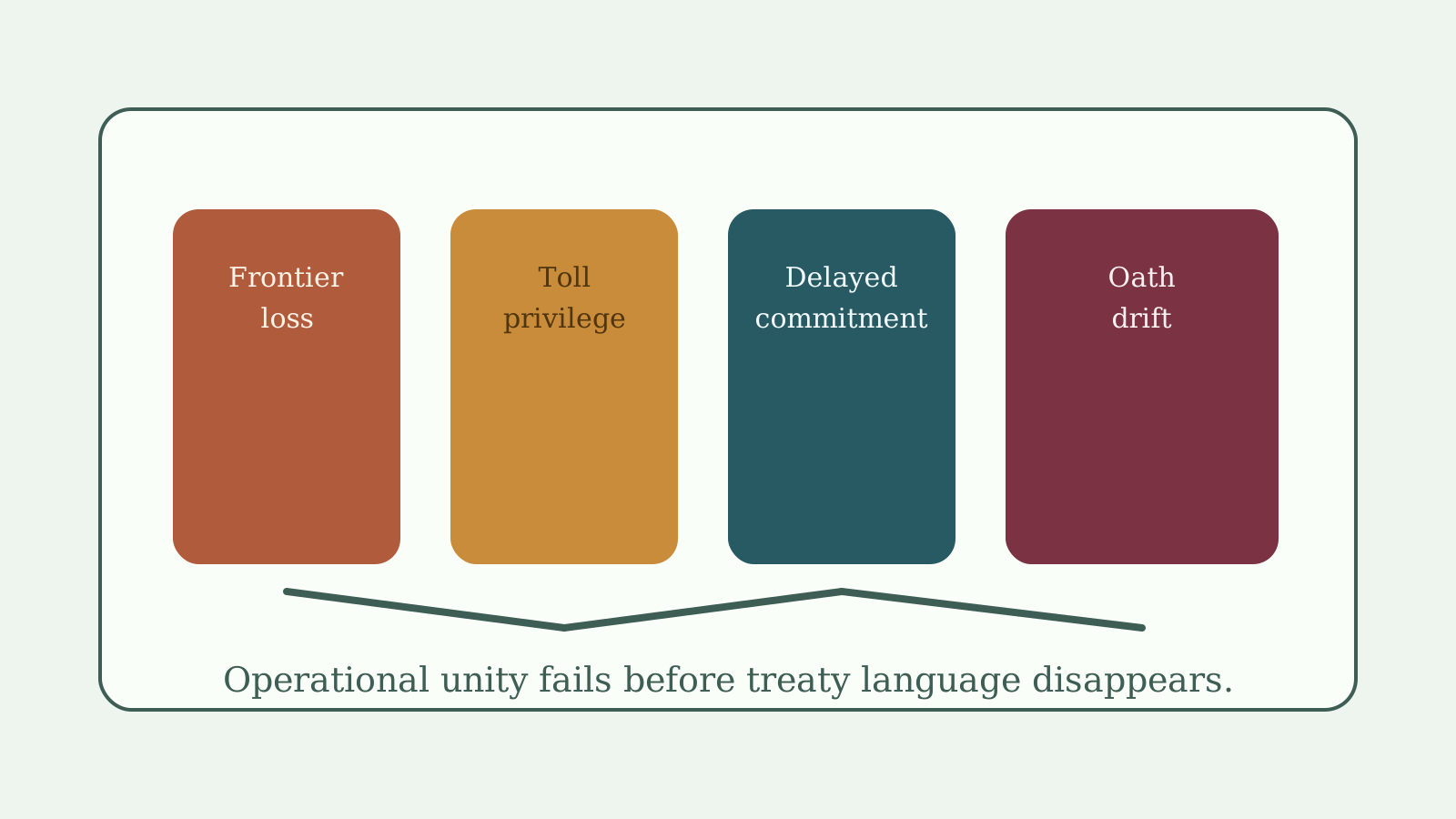
The confederacy drifts from workable bargain to bargaining shell through four linked pressures. Frontier marches absorb more visible loss. Toll cities keep a larger share of the river surplus. The oath assembly keeps declaring unity after actual mobilization has slowed. Delay becomes a strategy because several members can force renegotiation simply by arriving late.
| Axis | Question | Signal |
|---|---|---|
| Frontier exposure | Who pays earliest when raids, flood damage, or convoy interruption increase? | March levies, damaged ford towns, escort losses, local depopulation, reserve depletion |
| Reward asymmetry | Which members keep more of the route value than their defense contribution justifies? | Customs privilege, toll retention, privileged warehousing, arbitration fees, urban exemptions |
| Oath legitimacy drift | Do members still believe the shared bargain means the same thing? | Assembly disputes, ritual refusal, contested exemptions, blame narratives, legal ambiguity |
| Delayed commitment | Who gains by waiting while others mobilize first? | Late convoy support, withheld flotillas, bargaining over reserve release, partial musters, proxy defense |
The treaty does not have to disappear for the coalition to stop functioning as one operational order.
Losses and gains remain uneven, but not uneven enough to break the belief that the route and frontier are shared responsibilities.
The reusable lesson is that coalitions break long before they dissolve formally. This study is useful because it shows how route value, frontier burden, and oath legitimacy can stay linked just long enough to function, then pull apart into bargaining drift without any single decisive betrayal.
Read what should come before it, what relation role matters next, and where this page should hand you off after the local graph is clear.
Start with Alliance Fracture Model and then return here once the surrounding concept stack is clear.
These entries clarify the footing underneath the current node before you move outward again. Start with Alliance Fracture Model when you want the clearest next role.
Use Guides when the study should feed into a worksheet or structured revision sequence.
4 handoff nodes stay inside Governance And Power. 3 handoff nodes share Regional.
Detail pages now expose the branch and scale of their surrounding graph before showing raw prerequisite and relation shelves, so continuation can stay taxonomy-led instead of adjacency-led.
Explain how legitimacy, coercion, administrative reach, frontier bargaining, and elite control are structured.
Start with the pressure map, locate legitimacy and capture mechanisms, validate against a frontier or state case, then run a governance stress test.
Explain campaigns, sustainment, force projection, defensive depth, and operational windows as structural systems.
Start with sustainment and projection models, identify the theater cycle, validate through an operational case, then run an operations stress test.
Explain how resources, goods, labor, information, and force circulate, stall, buffer, and break.
Start from the resource-flow loop, trace storage and throughput models, compare one logistics study, then run a flow audit worksheet.
Use this scale when the region is the main leverage unit for settlement, extraction, governance, or conflict.
Use this scale when the strongest explanation depends on several levels staying visible together.
Use this scale when routes, relays, buffers, and linked nodes matter more than territorial bulk.
Use prerequisites when you want the shortest path into the assumptions this page depends on.
A model for how unequal exposure, diverging incentives, legitimacy disputes, and delayed losses turn a working coalition into a brittle one.
A model for how material capture becomes durable rule only when extraction, justification, and visible order remain coupled strongly enough to be tolerated.
These groups explain why each neighboring node matters, whether it stabilizes the concept, operationalizes it, proves it, or pushes the lane further.
Use foundation relations when this node depends on a concept, term, or framing layer that should be explicit before you branch further.
A model for how unequal exposure, diverging incentives, legitimacy disputes, and delayed losses turn a working coalition into a brittle one.
A model for comparing what different factions actually control across territory, movement, institutions, storage, and legitimacy rather than by abstract power labels.
Use operationalizing relations when you want the current abstraction rendered as a cleaner model, loop, or structural device.
A model for how material capture becomes durable rule only when extraction, justification, and visible order remain coupled strongly enough to be tolerated.
Use contrast relations when the difference between two nodes is more useful than simple adjacency or agreement.
A systems study of how estuaries, port warehousing, and toll control create a state that is wealthy, connective, and strategically exposed.
These entries still matter, but they currently rely on generic adjacency instead of typed continuation semantics.
A framework for tracking which passes, ports, narrows, and crossings decide political leverage at the edge of a system.
A historical study of how alternate attendance, highway discipline, domain expenditure, and status ritual converted a polycentric order into a governable legitimacy regime.
Studies apply Spcent's lenses to complete cases. Read them to see whether geography, surplus, corridors, and pressure patterns still make sense when placed inside one setting.
The goal is not to retain setting trivia. The goal is to extract reusable patterns and structural habits you can reapply elsewhere.
Studies are strongest when you already know the frameworks and models underneath them, so you can recognize the structural moves being made.
After reading a study, identify which layer of your own draft needs work and go back there with one concrete change in mind.
Keep these collapsed until you want to turn the page into an active reading exercise.
What are the decisive regions, corridors, or chokepoints in this case?
What keeps the studied world stable, and what makes it brittle?
Which model or framework do I need next if I want to reproduce this pattern in my own project?
These routes are tuned to the kind of entry you are currently reading, so you can leave this page with one deliberate next move.
Use Guides when the study should feed into a worksheet or structured revision sequence.
Cross-layer moveReturn to the worlds module when the case highlights a weak worldbuilding layer in your own draft.
Cross-layer moveOpen models when the case reveals a mechanism you want to isolate and reuse directly.