Preparing the current spcent route.
The page shell is online. Shared content and route data are still being assembled.
A synthetic study of how geothermal wells, conversion works, insulated relay towns, and licensed ward crews create a wealthy but brittle frontier commonwealth.
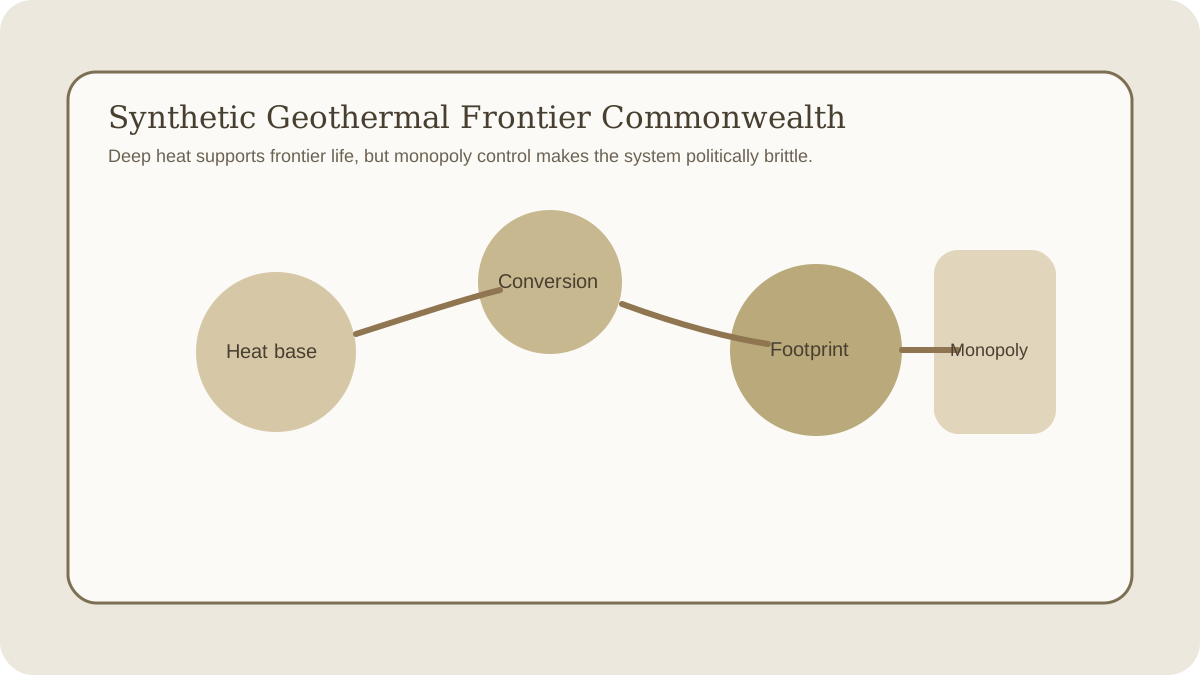
This synthetic commonwealth forms along a volcanic frontier where geothermal wells provide the only reliable heat source capable of sustaining year-round food production, insulated housing, and conversion works. That abundance invites migration and investment, but it also concentrates power in the organizations that keep wellhouses, pipe wards, and valve codes operational.
The setting is useful because it fuses material substrate and capability monopoly. Deep heat supports food and industry, yet the frontier remains governable only while a licensed technical order controls maintenance and deployment. The commonwealth becomes rich through conversion and brittle through monopolized access.
Explains why frontier density only becomes durable once geothermal heat supports greenhouses, preservation, and winter labor continuity.
Infrastructure Footprint ModelClarifies why pipes, relay stations, and protected depots create a long maintenance geography that the frontier cannot ignore.
Magic Monopoly StructureShows how licensed ward crews and sanctioned valve rites turn technical control into political monopoly.
The commonwealth stabilizes through four linked burdens. Geothermal energy anchors the food and heat base. Conversion works turn that energy into metals, chemicals, and insulated infrastructure. The operating footprint expands across exposed relay towns and depots. A licensed order claims authority over ward maintenance, emergency shutdown, and access to the most productive wells.
| Axis | Question | Signal |
|---|---|---|
| Heat-fed intake | What makes the frontier capable of supporting dense life at all? | Greenhouse production, drying houses, winter workshops, preserved calorie base, thermal refuge |
| Conversion works | How does raw heat become durable frontier power? | Steam plants, chemical baths, smelters, insulated fabrication, pipe casting, replacement stock |
| Footprint exposure | What grows fragile as the system stretches outward? | Relay towns, pipe corridors, pump stations, repair depots, snow pass lines, isolated camps |
| Monopoly leverage | Who controls access when operation depends on specialized rites, crews, or sanctioned tooling? | Licensed warders, charter houses, emergency shutdown rights, training bottlenecks, black-market sabotage |
The same system that makes the frontier unusually rich also creates dependence on a narrow technical order.
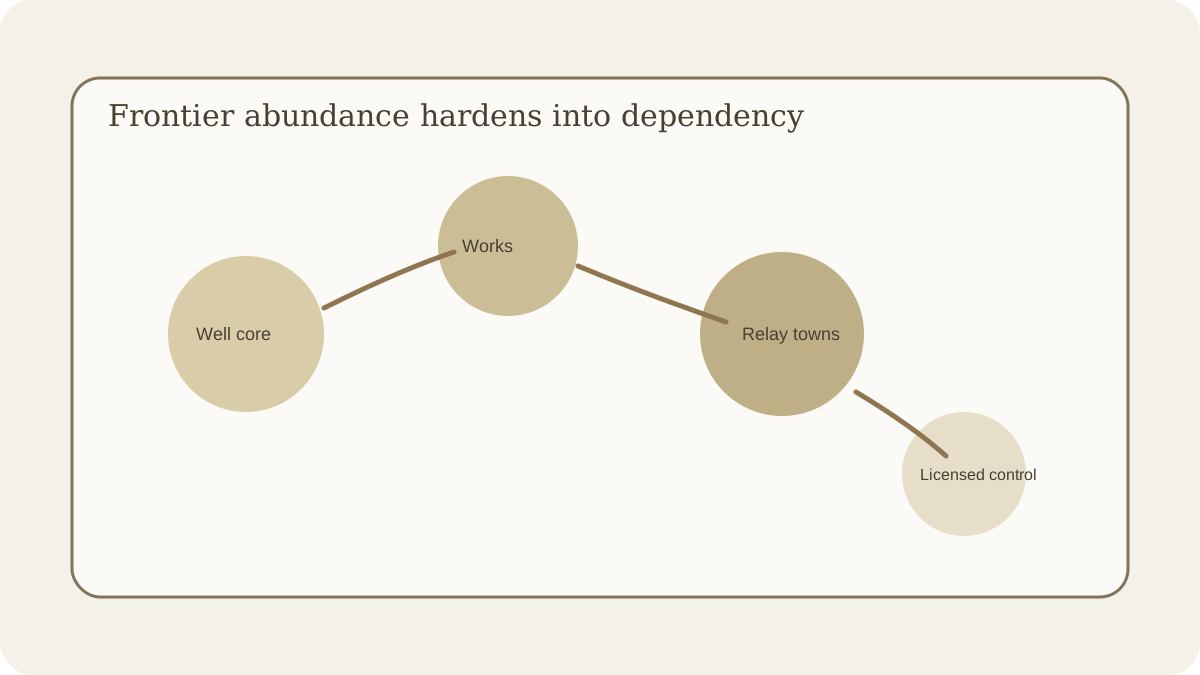
Reliable geothermal wells let the first relay towns feed crews, preserve surplus, and support conversion works despite hostile surrounding conditions.
The reusable lesson is that frontier abundance becomes politically distinctive when capability is both infrastructural and monopolized. This synthetic case shows how a world can grow from deep heat into industry, settlement, and constitutional tension without ever dropping the underlying maintenance burden.
Read what should come before it, what relation role matters next, and where this page should hand you off after the local graph is clear.
Start with Food Energy Base Model and then return here once the surrounding concept stack is clear.
These entries clarify the footing underneath the current node before you move outward again. Start with Material Continuity Framework when you want the clearest next role.
Use Guides when the study should feed into a worksheet or structured revision sequence.
3 handoff nodes stay inside Capability Regimes. 2 handoff nodes share Regional.
Detail pages now expose the branch and scale of their surrounding graph before showing raw prerequisite and relation shelves, so continuation can stay taxonomy-led instead of adjacency-led.
Explain how technology, magic, infrastructure, communication, and transformation capacity rewrite baseline constraints.
Start with the operating regime, price the capability through diffusion or monopoly models, compare a regime-rewrite case, then run a capability sanity check.
Explain what the world is materially built from before politics, balance, or style are discussed.
Start in Worlds, read the anchor framework, open one regional model, validate with a complete study, then finish with a world assembly guide pass.
Use this scale when the strongest explanation depends on several levels staying visible together.
Use this scale when the region is the main leverage unit for settlement, extraction, governance, or conflict.
Use this scale when routes, relays, buffers, and linked nodes matter more than territorial bulk.
Use prerequisites when you want the shortest path into the assumptions this page depends on.
A model for tracing how staples, fuel, fodder, labor conversion, and storage create the recurring intake that makes density and surplus possible.
A model for reading how roads, grids, canals, wards, depots, and maintenance corridors spread capability by enlarging the physical footprint a society must keep repaired.
These groups explain why each neighboring node matters, whether it stabilizes the concept, operationalizes it, proves it, or pushes the lane further.
Use foundation relations when this node depends on a concept, term, or framing layer that should be explicit before you branch further.
A framework for reading how food, water, health, and maintenance cycles must keep reproducing beneath settlement, surplus, and political order.
Use operationalizing relations when you want the current abstraction rendered as a cleaner model, loop, or structural device.
A model for reading how roads, grids, canals, wards, depots, and maintenance corridors spread capability by enlarging the physical footprint a society must keep repaired.
A model for how orders, temples, state bureaus, or chartered houses monopolize magical capability through licensing, site control, doctrine, and rationed access.
These entries still matter, but they currently rely on generic adjacency instead of typed continuation semantics.
A model for tracing how staples, fuel, fodder, labor conversion, and storage create the recurring intake that makes density and surplus possible.
A model for tracing how raw inputs become processed components, standardized output, and scalable capability through conversion bottlenecks rather than simple extraction.
Studies apply Spcent's lenses to complete cases. Read them to see whether geography, surplus, corridors, and pressure patterns still make sense when placed inside one setting.
The goal is not to retain setting trivia. The goal is to extract reusable patterns and structural habits you can reapply elsewhere.
Studies are strongest when you already know the frameworks and models underneath them, so you can recognize the structural moves being made.
After reading a study, identify which layer of your own draft needs work and go back there with one concrete change in mind.
Keep these collapsed until you want to turn the page into an active reading exercise.
What are the decisive regions, corridors, or chokepoints in this case?
What keeps the studied world stable, and what makes it brittle?
Which model or framework do I need next if I want to reproduce this pattern in my own project?
These routes are tuned to the kind of entry you are currently reading, so you can leave this page with one deliberate next move.
Use Guides when the study should feed into a worksheet or structured revision sequence.
Cross-layer moveReturn to the worlds module when the case highlights a weak worldbuilding layer in your own draft.
Cross-layer moveOpen models when the case reveals a mechanism you want to isolate and reuse directly.