Pulling this page together.
Preparing content, navigation, and supporting references for this route.
Preparing content, navigation, and supporting references for this route.
A structural study of how mountain walls, river corridors, frontier buffers, and uneven civilizational density shape Middle-earth as a geopolitical system.
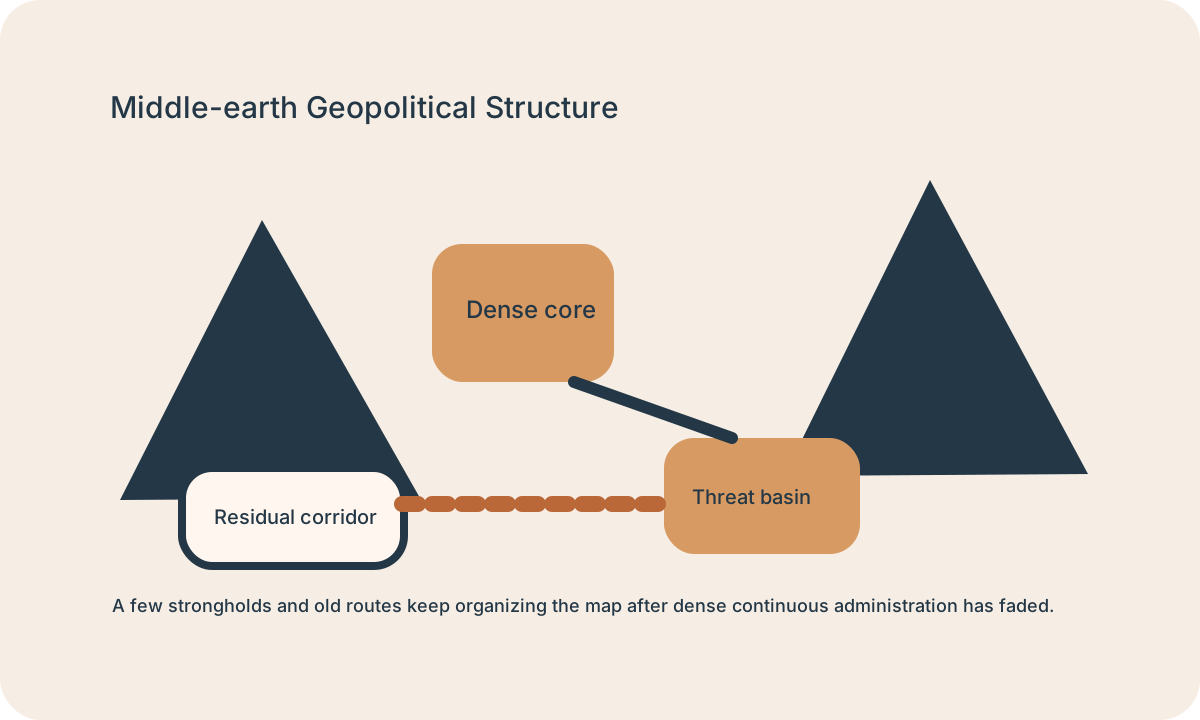
Middle-earth is easiest to read not as one continuous civilization, but as a broken continental field separated by mountains, forests, old ruins, and long corridor distances.
Its political pattern comes from uneven density. A few regions sustain durable institutions, while wide remain thinly settled, culturally fragmented, or dependent on old infrastructure.
Find the few valleys and city-regions where administration can remain durable across long periods.
Map old roads, fords, and passes that still carry movement and legitimacy even after political decline.
Show where wide frontier space absorbs cost and where concentrated hostile basins can project pressure outward.
Provides the regional frame for comparing dense cores such as Gondor or the Shire against wide low-density frontier belts.
Civilization Pressure MapExplains why decline, overextension, and residual institutions matter more than simple map size.
Frontier Chokepoint LedgerClarifies why passes, river crossings, and corridor gates decide strategic timing across the continent.
The strongest pattern is civilizational residue. Old roads, watchtowers, and memory of former kingdoms still shape movement and legitimacy even where dense rule has receded.
This creates a world in which political control is rarely uniform. Strongholds matter more than continuous borders, and corridor security matters more than abstract claims to empty land.
| Axis | Question | Signal |
|---|---|---|
| Dense core | Where can stable administration persist? | River valleys, arable lowlands, fortified city-regions, inherited road systems |
| Residual corridor | What still connects the wider map? | Old highways, ford chains, mountain passes, relay settlements |
| Frontier buffer | Where does control become expensive and intermittent? | Thin settlement, broken infrastructure, raiding exposure, long reinforcement times |
| Threat basin | Where can concentrated hostile force build pressure? | Protected inner zones, coercive centers, few access gates, outward projection routes |
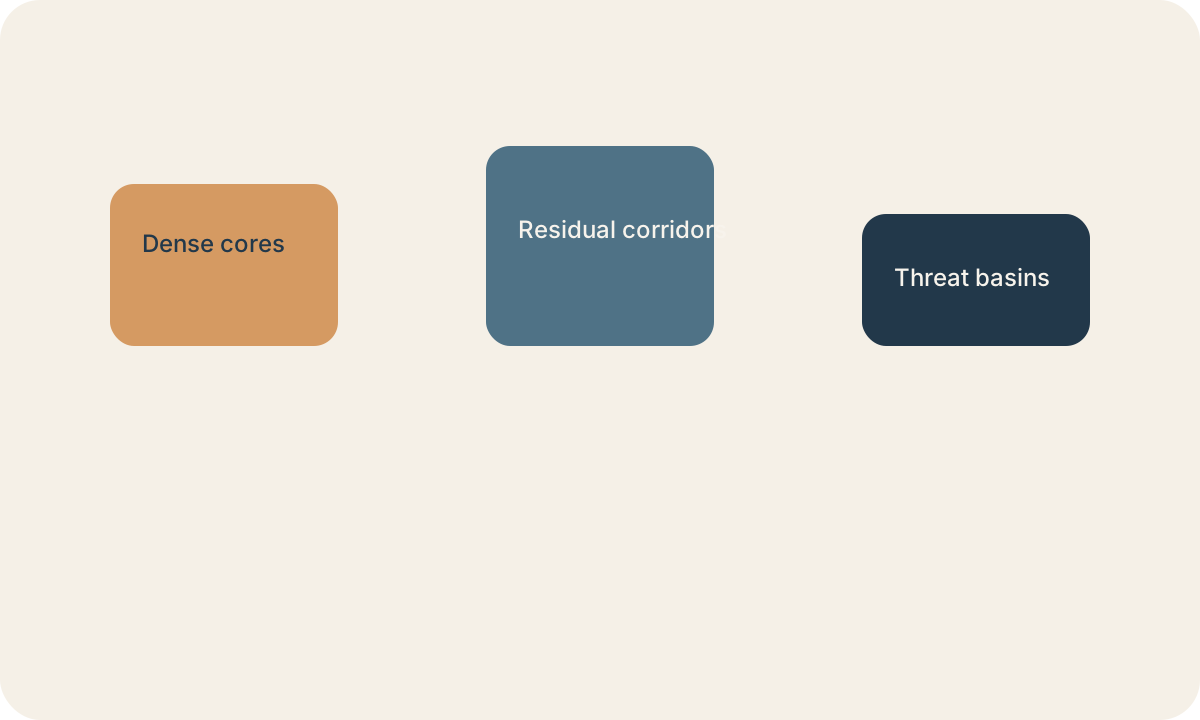
Switch the axis to compare how dense cores, residual corridors, frontier buffers, and threat basins behave under different structural questions.
Low-friction regions where institutions and settlement can reproduce themselves over time.
Stable rule depends on local density, defensible depth, and enough stored surplus to outlast shocks.
Inherited routes that keep movement and legitimacy alive across otherwise broken space.
Authority travels through memory, roads, and key crossings more than through continuous administration.
Wide transition space that absorbs delay, raid pressure, and thin administrative reach.
Rule becomes intermittent, negotiated, or symbolic because reinforcement and oversight arrive slowly.
Concentrated hostile interiors that can push force outward through a limited set of gates.
Power concentrates because protected hostile interiors can choose when and where to project pressure.
Use the toggle to see how the same corridor-and-frontier map behaves when strongholds are stable, institutions thin out, or hostile pressure surges.
When major corridors stay open and frontier pressure is limited, dense cores can project enough legitimacy and exchange to keep the wider field coherent despite its broken geography.
Use the timeline to follow how a broken but legible continental field shifts from guarded continuity into long decline and then into concentrated wartime pressure.
Dense cores, guarded crossings, and inherited roads preserve enough continuity for the continent to feel coherent even without uniform administration everywhere.
One of the strongest features of the case is that low-density land is never meaningless filler. Empty distance, broken roads, ruined watch networks, and difficult crossings all continue shaping what dense cores can actually promise. That makes the map feel old and formal at the same time. The continent is not coherent because it is evenly governed. It is coherent because distance, residue, and chokepoint geometry keep structuring action even where administration has thinned out.
This is a valuable corrective for fantasy settings that treat wilderness as visual backdrop until armies suddenly march through it. Middle-earth behaves differently. Wide frontier belts absorb cost, slow reinforcement, and preserve uncertainty, so movement across them has political meaning long before battle begins.
The study also shows why strongholds, valleys, and guarded crossings can matter more than clean territorial lines. When density is uneven, control radiates outward from durable nodes instead of filling space uniformly. That is why a few fortified regions and residual corridors can hold a continental field together more effectively than a large number of nominal claims on sparsely governed land.
This logic makes the world transferable. A creator can build large coherent fantasy geography without inventing modern border administration everywhere. The key is to decide which cores actually reproduce order, which corridors keep the map legible, and which frontier belts remain too costly to normalize.
Middle-earth is especially strong as a case about residue, frontier cost, and uneven civilizational density. It is less useful as a direct model for settings with dense bureaucratic penetration, cheap long-range transport, or communications systems that erase many of the delays the map depends on. In those worlds, the same mountains and corridors may still matter, but not in the same proportion.
Used correctly, the case teaches that fantasy space should carry operational consequences. Used too literally, it can encourage imitation of iconic place names and moral geography instead of the deeper structural lesson.
The reusable lesson is that a large fantasy world does not need dense continuous state control to feel coherent. It needs durable corridor logic, residual institutional traces, and believable frontier cost.
Middle-earth works structurally because it treats empty space as politically meaningful. Distance, enclosure, and inherited route networks keep deciding what later actors can and cannot do.