Pulling this page together.
Preparing content, navigation, and supporting references for this route.
Preparing content, navigation, and supporting references for this route.
A framework for tracking expansion, consolidation, frontier friction, and institutional fatigue across a civilizational space.
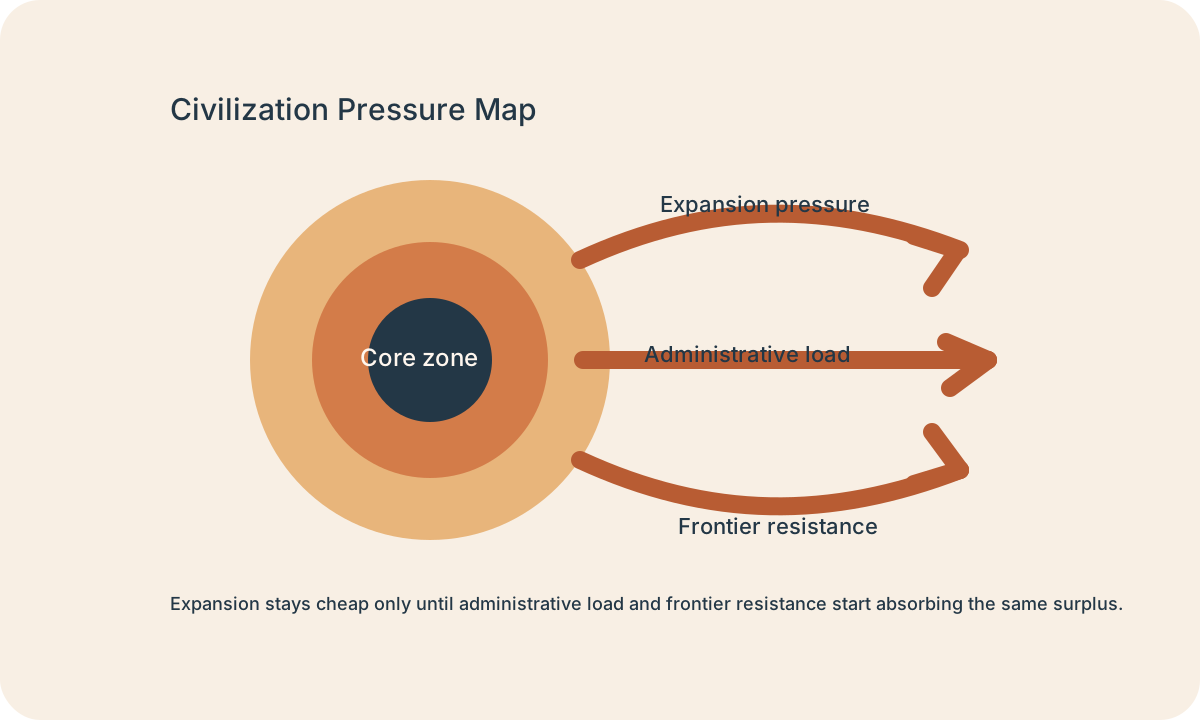
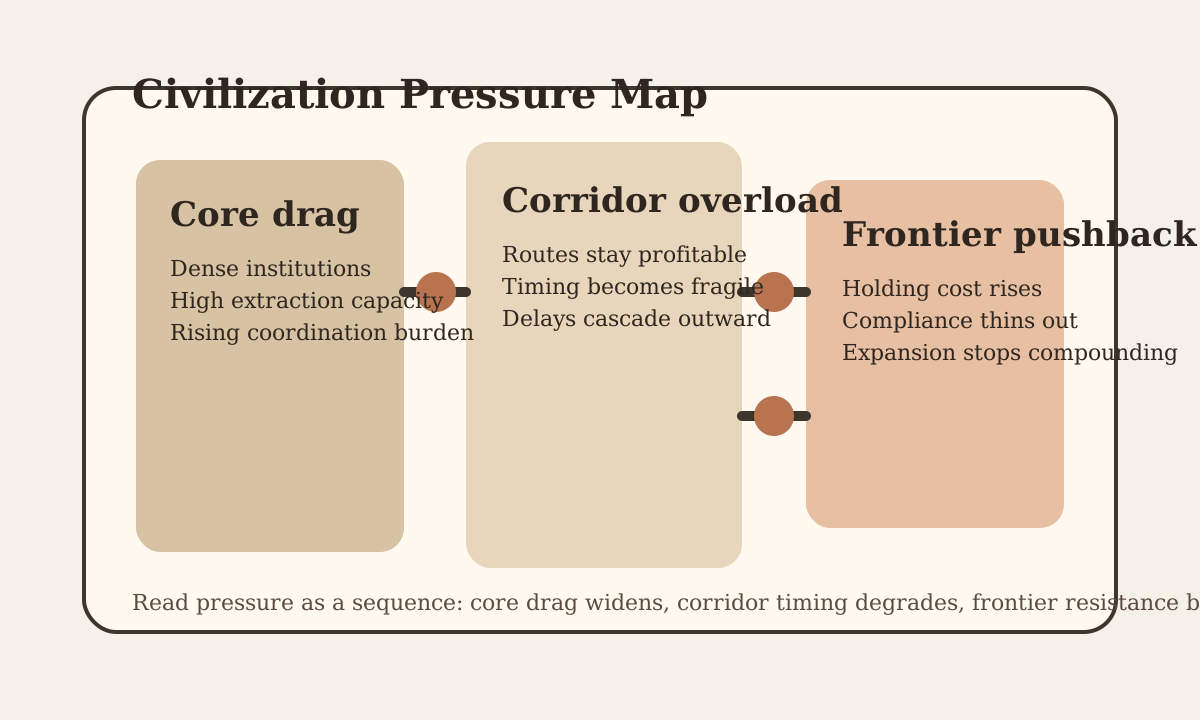
Instead of telling a civilizational history as a sequence of rulers and wars, the pressure map asks where the system is under strain.
The main axes are expansion pressure, , and frontier resistance.
Locate the frontiers where new land, corridors, or resources still reward additional investment.
Track where tax drag, coordination cost, and distance are making the core harder to govern cleanly.
Show where local terrain, insurgency, or low compliance turns outer zones into expensive commitments.
| Axis | Question | Signal |
|---|---|---|
| Expansion pressure | Where is growth still rewarded? | Frontier settlement, military projection, corridor investment |
| Administrative load | Where is governance becoming too costly? | Tax drag, fragmented jurisdictions, overstretched institutions |
| Frontier resistance | Where does the edge push back? | Raids, insurgent zones, low-compliance borderlands |
Use the stepper when you want to see how each pressure axis changes the whole civilizational field instead of treating them as isolated symptoms.
This is the phase where outer land, corridor access, or resource capture still repays further investment. The field feels energetic because conquest or settlement still compounds.
Use the timeline to follow how a civilization often moves from rewarded expansion into core drag and then into frontier overcommitment.
New land, corridors, or extraction zones still repay additional investment, so the center reads frontier movement as strategic opportunity rather than systemic stress.
The framework becomes more formal once pressure is treated as a spatial distribution problem instead of a judgment about whether a civilization is wise, decadent, or aggressive. Expansion pressure asks where additional reach still looks attractive. Administrative load asks where coordination, counting, and reinforcement are becoming expensive. Frontier resistance asks where the edge refuses to convert effort into stable order. None of those axes is automatically good or bad. They are signals about where the system is still compounding and where it is beginning to consume itself.
That distinction matters because many civilizational stories become vague at the exact moment they should become analytical. A setting says an empire is "overextended" or "in decline" without locating where the burden actually accumulates. The pressure map forces the explanation back onto routes, cores, fiscal drag, enforcement cost, and frontier feedback. Once those are named, the system can be compared against other civilizations instead of being narrated as a one-off moral arc.
The cleanest warning sign is when frontier gain no longer lowers core stress. New land, tribute, or corridors may still be acquired, but the cost of maintaining them rises faster than their stabilizing value. A second warning sign is when the core begins spending more effort on legibility and enforcement than on productive coordination. At that point a civilization may still look territorially large while its operating slack is shrinking.
The final warning sign is when frontier resistance and administrative load begin feeding each other. Garrisons, customs offices, escorts, and local brokers multiply, but instead of making the edge calmer they make the whole system more brittle. This is the moment when retreat, delegated rule, or narrowed ambition starts to become structurally rational even if ideology still points toward growth.
This framework is useful when a world needs to explain why a civilization stabilizes, fractures, or redirects its energy.
It is especially useful for distinguishing between a frontier that still rewards expansion and a that has already become a cost sink. The map also helps separate administrative fatigue in the core from military strain at the edge, which prevents every crisis from collapsing into a vague story about imperial decline.
The map does not replace chronology, biography, or ideology. It is not a total history of a civilization. Its role is narrower and more useful: to identify where strain accumulates and why the same polity behaves differently across core, corridor, and frontier space. Once that field is clear, narrative history becomes easier to write because events can be interpreted against a visible structural backdrop rather than against generic rise-and-fall language.
Pressure usually migrates rather than appearing everywhere at once. Expansion can stay profitable for a generation, then suddenly raise transport burden, tax drag, and enforcement cost faster than new territory can compensate.
That sequence is what makes the framework portable. It gives a creator a way to explain why one civilization doubles down on conquest, another retreats into corridor defense, and a third fragments because the core can no longer convert outer expansion into reliable internal order.